
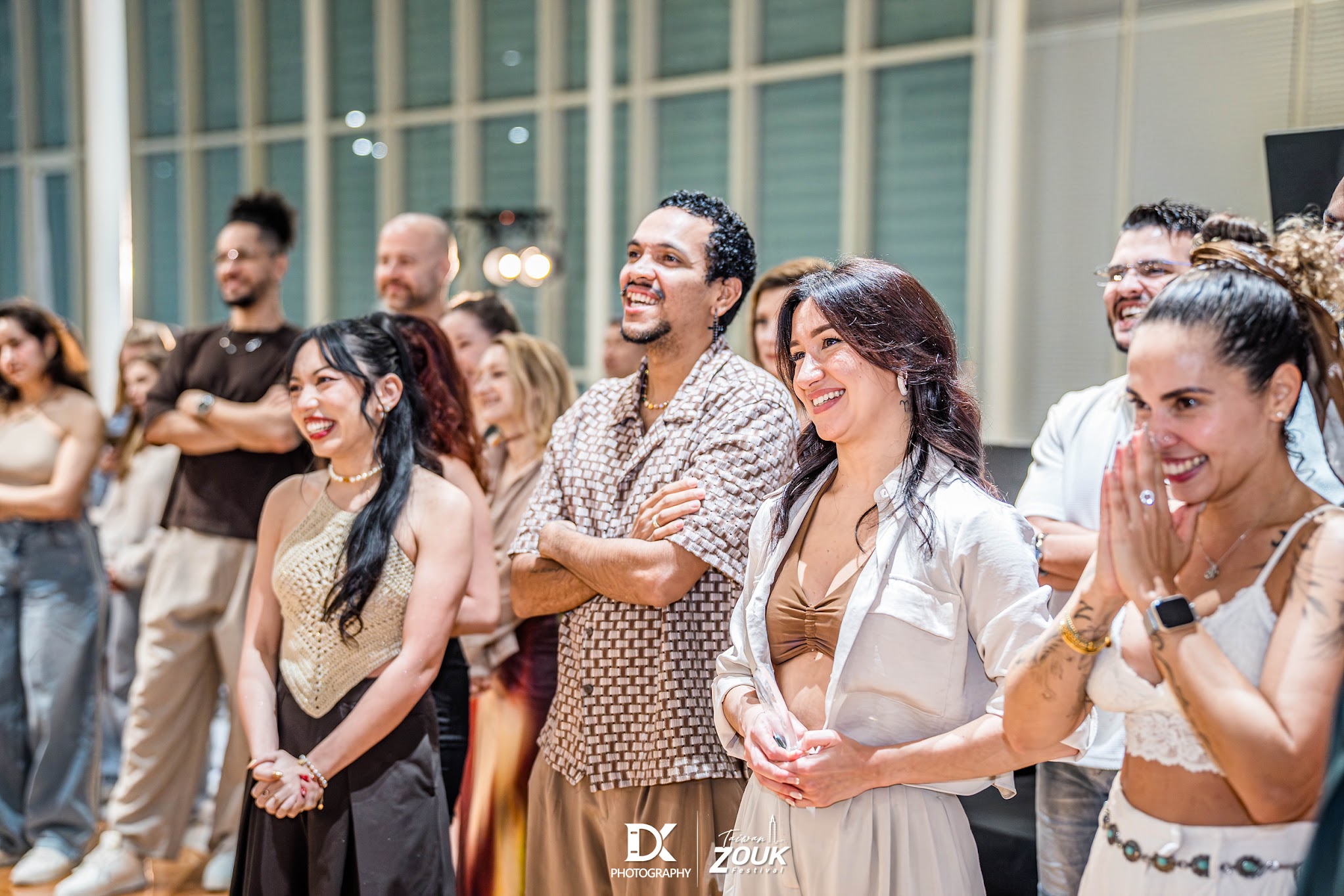
I am often asked by dancers, artists, and other organizers how I choose artists for our weekenders at Flow Taipei, for Taiwan Zouk festival, Taiwan Lambada Festival, etc. This is a great question, and organizers will answer differently because we all have our own values, motivations, etc. I think the answers are useful to a lot of people in different roles in the scene, so let’s dive in!
First, I’ll say that I only bring people whom I have met in person and have already taken classes from and social danced with or observed social dancing. I won’t bring someone I have only seen on social media. If I’ve never met someone or I have very little personal experience with them, I might welcome them as a guest, but I wouldn’t hire them. Hiring someone gives them power to affect my reputation (positively or negatively),and I want to preserve a reputation for bringing only excellent teachers, so hiring someone with whom I don’t have personal experience is riskier. Hiring someone also connects us so that we can affect each other energetically. More on this later- the point now is I won’t take the risk of hiring someone I am not already pretty familiar with.
The focus is different for weekenders vs festivals vs marathons, so the value of these characteristics will change depending on the event type, but overall this is what I evaluate:
*this article may be updated as my criteria evolves
1) How interested is my community in seeing them?
Organizing is a lot of work and a big commitment of time and money. I have some influence because I’ve built a reputation for bringing very good people, but my power is limited. Even if I think someone is amazing, if my community (local or regional) isn’t interested in them, the event will flop- there won’t be many people, I’ll lose money (or more money than usual 😅) and it won’t be an efficient use of my limited time, money, and energy. I’m not going to bring someone my community doesn’t have any particular feelings about. I need to select people who inspire my community. I can check this by asking my community members about them and listening to their response and by looking at the artists’ IG accounts and seeing how many of my community members follow them. I’m always paying attention to what my community thinks about various artists.
Sometimes people ask me to host events for them, and I feel doing that would benefit them much more than my community or me. I know some organizers have a hard time saying no and they wind up organizing events that are mostly for the benefit of people who want to travel as artists. Any event I put on should be good for my community *and* the artist and myself.
Sometimes it’s the right person but not the right time. That person might need to build up their reputation a little more and get more traction on social media, or some people from my community might need to see them at other events first and tell others about them, or maybe come as a guest to one of my events first.
2) How are their workshops?
This is really important for weekenders and festivals. For weekenders I really want teachers that can connect to a smaller group well and tie together six or eight hours in a weekend to feel like a comprehensive learning experience. For festivals, the people in the workshop will change each time, and the workshops are spread out, so it’s more about what they can do in a single hour.
Positive
-class starts and finishes on time and feels like the objective was reached at the end (even if it had to shift)
-students are focused throughout the class and feel connected to the teachers
-if the teachers joke around, the students laugh, and if they don’t laugh, the teachers change their approach
-the teachers guide the learning process smoothly throughout the class (good preparation, ability to adapt, good time management)
-an overall good learning outcome, e.g. ~70% of the students have some grasp of the movement or feel they learned something useful and the difference is visible(but this really depends on whether the students joined a class that should be suitable for them and also on the instructions to the teachers from the organizer)
Negative
-class time is not respected, feels rushed or incomplete at the end
-the students look bored, start their own conversations, leave the class
-teachers make jokes that the students don’t understand or like and they keep trying and failing
-teachers get lost in their material, forget what they were teaching, argue with each other, or get bogged down in small details or sidetracked by questions
-students generally are lost and cannot reproduce or explain much of what was taught
3) How are their demos/performances/competition dances?
I look for dancers that can really make us feel that dance is an art. Many of us have been inspired to learn zouk because we saw a demo or performance that just blew our minds, whether because of technical mastery, musicality, a deep sense of connection, playfulness… it could be many different things, but the common factor is an ability to inspire. Teaching well and giving a great demo are two different skills. I think teaching well is more important for weekenders, and great demos and jack and jill dances are more important for festivals. But an artist is ideally well-rounded and can create a good demo/competition dance as well as lead class effectively. I don’t think it’s necessary for all zouk artists to perform, but if they do perform, it needs to be inspirational and/or entertaining.
4) How is their social dancing?
Of course, I like to bring people who I personally love to dance with or watch dancing with others. I stay involved with dance most of all because I love social dancing, and I want to invite people whose social dance style is something that I want to support and share with others. So I look for people who dance with presence, connection, comfort, musicality, technical ability, and joy. But besides my own feeling, I am thinking about the experience the participants will have:
Positive
-dances with many participants of different levels
-people enjoy dancing with them (tell their friends, share videos etc)
-people feel like the artist enjoys the dance too, regardless of level
-spends a reasonable amount of time social dancing with participants during the party
Negative
-only dances with advanced dancers or people that fit some particular physical type
-people say the dance is uncomfortable or rough, boring, etc
-people feel the artist is just working, going through the motions
-comes super late or leaves super early, or doesn’t really dance even when there
This needs some qualifications-
Most of the time, artists are not getting paid for social dancing. Organizers expect they will social dance, but we don’t usually pay specifically for it. So the energy artists have for social dance is really going to be affected by
-their schedule (classes/competition/time for rest)
-their flights and accommodation and food, if they are comfortable
-the quality of the DJing and their personal preference for the music
-the feeling with the dancers at the event
So this will vary a lot, and it’s not reasonable to expect that an artist is going to dance all night, dancing with everyone, every night, at every event. But I’ll pay attention to this generally and try to account for these things. Also, sometimes we bring people for other qualities or skills and their social dancing is not as important.
5) How professional are they?
Professionalism is where a lot of would-be artists stumble. We have classes for how to dance or DJ, but we don’t really have classes for how to be a professional in this field!. It’s great if you are an amazing dancer/DJ, but it’s not enough. Every organizer is different- personally I am not in this for the money at all, and I’m not willing to tolerate people that cause me or my staff or the participants unnecessary stress, no matter how famous/popular they are. Organizing international events is already difficult and financially unrewarding enough and there are many things that go wrong. I only bring the people that I can depend on to do their work and make the event experience better for *everyone*.
This is especially important for Brazilians or any other nationality that needs a visa for Taiwan because I have to trust them to make the appointment and organize their documents and time to go to the consulate and get the visa. I have had to cancel weekenders twice because artists simply failed to get the visa, for no good reason, just poor planning, and it is *infuriating* and expensive and frustrating. If someone fails to get the visa for no good reason, I will probably never invite them again, no matter how much I like them personally. On the flip side, I’ve had artists go to great lengths to make sure they can get the visa, and I will always remember that.
Sometimes I have a good impression of someone but they have some reputation for not conducting themselves professionally, and I have to take that into consideration and ask around. No event is isolated, and people can talk all over the world about what happened at any one event, so professionalism is something that has to be always maintained if you want to keep a good reputation.
Positive
-Responds to messages in a reasonable amount of time (days, when the event is far off, faster as the event approaches)
-Writes and speaks politely (spelling and grammar are not important)
-Acknowledges and reads carefully when I send instructions
-Makes sure they have internet and reliable communication when they are in the country
-Keeps track of their own schedule when the info is given
-Consistently arrives a little early so they are ready to start their class/set on time
-Brings or finds everything they could reasonably be expected to bring themselves (cables, power adapters)
-Takes their work seriously
-Knows how to travel and considers it as part of their job
-Takes care of their visa
-Can deal with small problems on their own
-Can figure out what problems are appropriate to bring up with me and when
-Can give/receive feedback calmly and tactfully
-Asks for what they need so we can work it out
-Being humble and being respectful to me and my staff
-Can adapt to changing circumstances based on what the event needs
-Treats participants respectfully
-Keeps any personal affairs discreet
Negative
-Responds after weeks or months
-Doesn’t respond at all if they asked me for something and I politely declined or gave them an alternative
-Too casual when we don’t have a close relationship (always better to err on the side of being more polite)
-Doesn’t read instructions and asks me to keep explaining things I already explained or wrote somewhere else
-Tries to rely on free wifi spots/ doesn’t have reliable communications during the event
-Doesn’t know their schedule (when the info has been provided)
-Shows up at the last second or late, or can’t be found
-Asks me for things they should have brought themselves (cables, power adapters for DJs, etc)
-Obviously didn’t prepare for their class/set, doesn’t seem to care
-Expects me to explain very basic things about traveling, unable to take care of basic things because they are in a foreign country
-Relationship feels like I am a travel agent or concierge
-Doesn’t pay attention to visa requirements and fails to secure it or causes unnecessary stress from lack of preparation
-Asks me for help or complains about things that I would expect an adult/professional can handle themselves
-Brings up issues at bad times unnecessarily
-Rejects feedback/becomes angry or hostile at feedback
-Doesn’t ask for what they need but are unhappy when they don’t get it
-Treats me/my staff like we are personal assistants/travel agents/concierge
-Treats participants poorly/without respect, interacts with them inappropriately
-Obviously hunting for sexual partners, becomes the subject of gossip, leaves people hurt or angry
6) Do we vibe energetically?
I interact with people through dance, but I’m naturally more of an introvert. I like spending time with people individually or in small groups generally. The bigger or louder a person or group is, the more quiet I will generally become. I can’t handle people with much higher energy than me that are really active and want to do things together all the time. People that talk with a lot of drama and need a big response or an audience constantly will tire me out quickly. For a festival with a lot of people around to interact with, that can be ok, but for a weekender or a longer stay where we spend more time together, it will be difficult for me.
So I pay attention to people that I naturally get along with, people that are easy for me to talk to. And actually in zouk there are plenty of introverts who really engage with people in the workshops and parties but are very happy to be by themselves or just chilling quietly outside of the event. These are my people 😅 But other organizers may have totally different preferences.
I’m not great at being a tour guide or thinking of fun activities to take visitors to do. I do have a lot of friends around me that are good at that, thankfully, and they help out a lot. But if I find people that are also happy to be on their own or find friends and make their own entertainment and adventures without needing me, for me it’s fantastic. So it was really fun for me to watch the time between Taiwan Zouk Festival and Taiwan Zouk Marathon 2026 as everyone was meeting up with their own friends and exploring.
Sometimes artists will treat organizers differently because they see them as a key to career opportunities. Sometimes it’s unintentional; sometimes it’s very intentional. Once in awhile I might have a positive impression of someone but hear a very different impression from other friends who are not organizers/artists/high level dancers. So I try not to be suspicious, but sometimes I do have to try to evaluate whether someone is being genuine with me.
7) Do they make sense as part of the team I’m building? (added 7/4/26)
When I run a weekender, I typically just have one artist or couple, so I only need to think about how they will interact with our community. But when I run a festival, I bring many artists, all with different personalities and relationships and personal histories with each other. Even if I think the individuals are all great for the event, I have to think about how they will fit into the team because the synergy (or lack of) between artists has a strong effect on the atmosphere of the event.
How do I know who vibes together? I cannot possibly know how each artist feels about the others, but I can make guesses from observing them at different events. Who do I see hanging out together, popping up in each other’s classes, arriving and leaving together? I can also see on their Instagram accounts- who do they hang out with outside of the events? Who always pops up in their stories? There is a lot of information available if I take the time to look, even if I can’t see them in person often.
When I bring people that already vibe together, they’re going to naturally have more fun and share that joy with others. They’ll help each other out, show up and cheer for each other’s demos or maybe demo together, they’ll go eat together and walk/share ubers together. They’ll be more resilient and generally happier and able to overcome setbacks or small problems that might otherwise affect their mood and performance because they feel more comfortable and supported. It is also possible that people become too focused on their own friends and they become a clique and lose focus on the participants. So I have to look for people that are not just friends but whose friendship results in a better energy and vibe.
If I bring people that don’t really connect with or enjoy each other, then they may feel isolated, even at a big event. They won’t feel as seen or supported by the rest of the team. They may do their class and just go back to their room and they won’t feel as involved with the event, so they won’t naturally step in to add something or help something. Their experience will be less joyful and complete, and participants could feel that.
The worst would be bringing people that actively dislike or hate each other or at least have some current drama. They’ll spend time and energy thinking about this other person and it will probably affect their mood and their ability or willingness to fully participate in the event and just be present in the moment. They may come late and leave early just because they are trying to avoid someone. If I bring someone that many of the others have issues with, it could affect the entire team.
It is very possible to bring people that have issues with each other unintentionally. First, professionals don’t easily show that they have negative feels towards someone because they have a job to do and it isn’t good to let participants feel or see that kind of negative energy. Organizers want to bring people that bring positive energy. So even if they hate each other, in public they may smile and be courteous.
Also, sometimes artists working together are a romantic couple, and then during the partnership they break up. Some people can handle it well so people don’t easily feel it. But sometimes it’s messy or hostile but they still have to work together because they made agreements in advance. That’s probably the worst situation because I may have also arranged to have them stay together so they can’t easily get away from the person they have drama with.
So when evaluating potential artists I need to think of them not only as individuals but also how they will mesh together with the rest of the team. That is another reason why I only hire artists that I’ve personally interacted with and seen at events. I travel to a lot of events, so I have opportunities to see how they interact with others and get an idea of who they are friendly with, and then when it comes time to make an event, I have more information about how people will get along with each other, and I can build a more cohesive team.
*Thanks to Phoebe of Zouk Central for reminding me of this factor
Bonuses
Bonus 1- Do they have multiple skills that I can use?
There are many roles to fill in an event, especially a festival. For festivals we need MCs, DJs, judges, coordinators, marshalls, etc If I’m evaluating two different artists that I would like to bring, but one of them also can handle a role that I need to fill, that person will definitely have a leg up.
Bonus 2- Do they need a visa?
Visas are a big hassle and for Taiwan, the artists need to apply by themselves. No matter how well prepared, sometimes something goes wrong and they either can’t get the visa or we won’t know if they’ll get it until the very last minute. So if an artist already has a multiple entry visa for Taiwan or has a passport that doesn’t need a visa, it’s easier for me to invite them.
Bonus 3- Will they book their own flights?
I don’t like booking flights for artists. Brazilians always have like four names and they are all long and the e’s and i’s and o’s and u’s are easy to mix up 😅 It’s easy for me to make a mistake writing a name, and that might prevent them from being able to board. Sometimes the artist wants to change their flight for personal reasons, or sometimes there is some problem with the flight or ticket and then I would have to get involved to resolve it. Even just buying the tickets requires what I think is unnecessary coordination because I don’t know their schedules so I usually would need to check with them multiple times to find the flights that work, and if we have some lag in our conversation, maybe those tickets disappear before we can confirm. We are always in different time zones and I can’t be on call 24h/day to do this.
I also really prefer just dealing with the artist and not needing to coordinate to exchange money with other organizers whom I may not know/trust. So I reallllllly strongly prefer when artists buy their own flights and I directly reimburse them electronically for the flight or my share of the tour. This makes my life so much easier, and honestly I feel it’s generally easier for the artist as well when they control their own tickets.
This requires trust from the artists because they are putting up their own money first and counting on me to come through with the money for the tickets. I always pay for the flights as quickly as possible, so I have a good reputation for this.
Bonus 4- Are they on a tour in the region/ are the flights low-cost?
We all want lower flight costs for events. Often the flights to Taiwan cost more than the workshop fees! So if artists are able to book a tour of a few other countries in the region so we can share the tour cost, that is definitely a bonus. And some flights are just impossible without sharing between events- I can’t bring artists from Brazil and send them back just for a weekend. It’s just financially impossible. So it’s a big bonus if the flight costs are shared. However, flight costs are always a secondary consideration for me- choosing the right people is my priority.
Bonus 5- Are they from a community that might support the event?
This is more for festivals. Many of the most popular couples are on the road all the time and don’t have their own community of students. But some are able to maintain their own students. If an artist has their own community in a place with a direct flight to Taipei, and I think there’s good chance some students would like to follow them to my event, it’s definitely a plus.
Conclusion
Every artist is unique and has their own blend of skills and talents. There is not one ideal perfect mix of characteristics, and it’s difficult to find someone who is amazing in all aspects. So it’s not necessary or even possible to be perfect and tick every single box, but these are the main criteria I use to evaluate people to invest my time and money in.
Relative to the size of the zouk scene worldwide, there are a lot of artists and people who would like to teach/DJ internationally. It’s just not possible for me or any other organizer to invite everyone that I would like. The reality is that Zouk events are a very niche market and the money coming in for events is very limited. It can be a stretch just to offer a bed at an event, even for a professional, much less organize a whole weekender. At the end of the day, if the event doesn’t make money, it’s coming directly out of my pocket. So don’t feel too bad if you contact me or another organizer and we decline to hire you.
Of course these are just my personal criteria, and they will vary among organizers, but hopefully this very long list is helpful to organizers and artists and those who aspire to be either.
See you on the dance floor!
Have something to say? Comment on the Instagram post here